
Tesla, The Car That Could Drive Itself
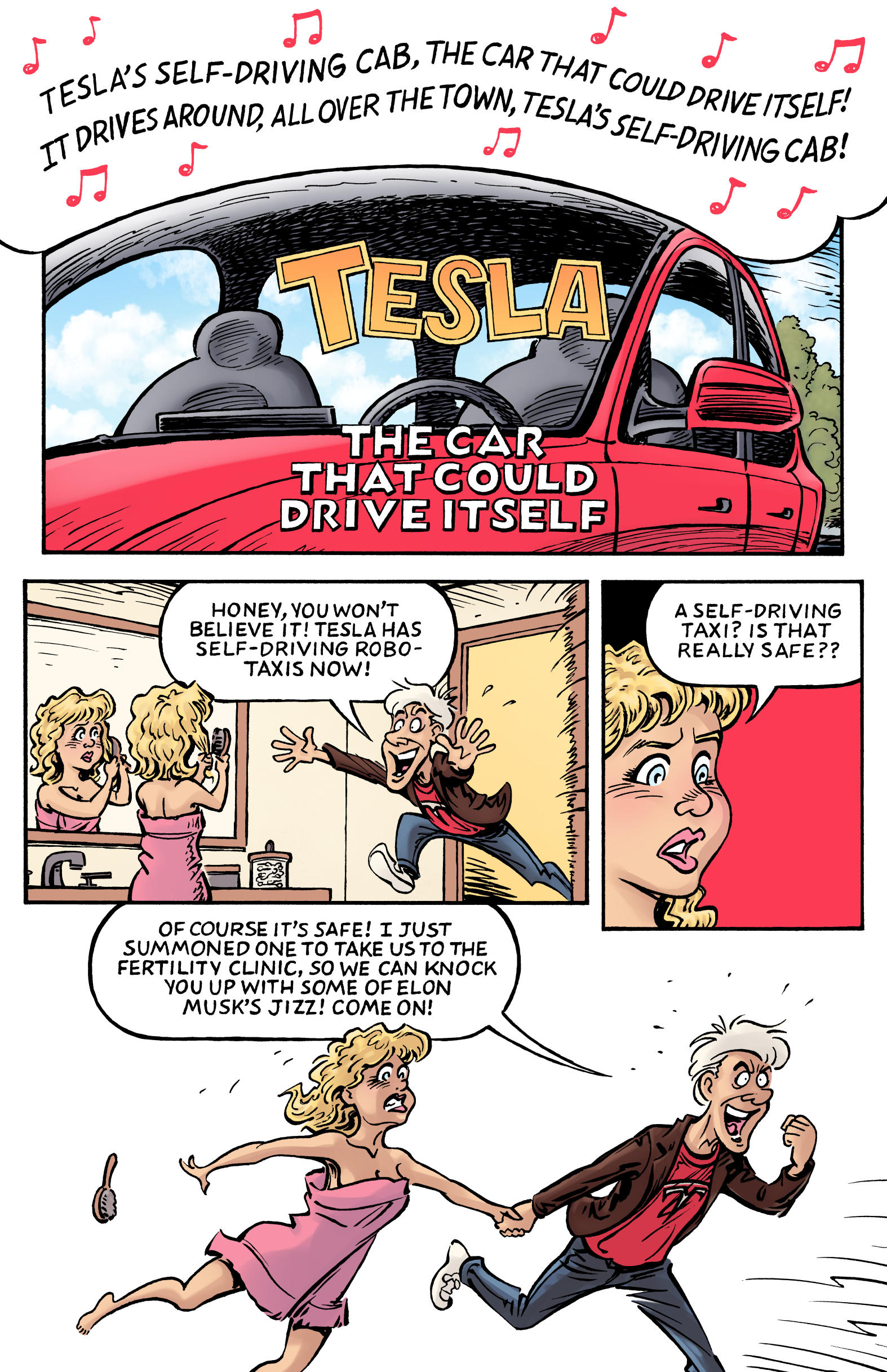
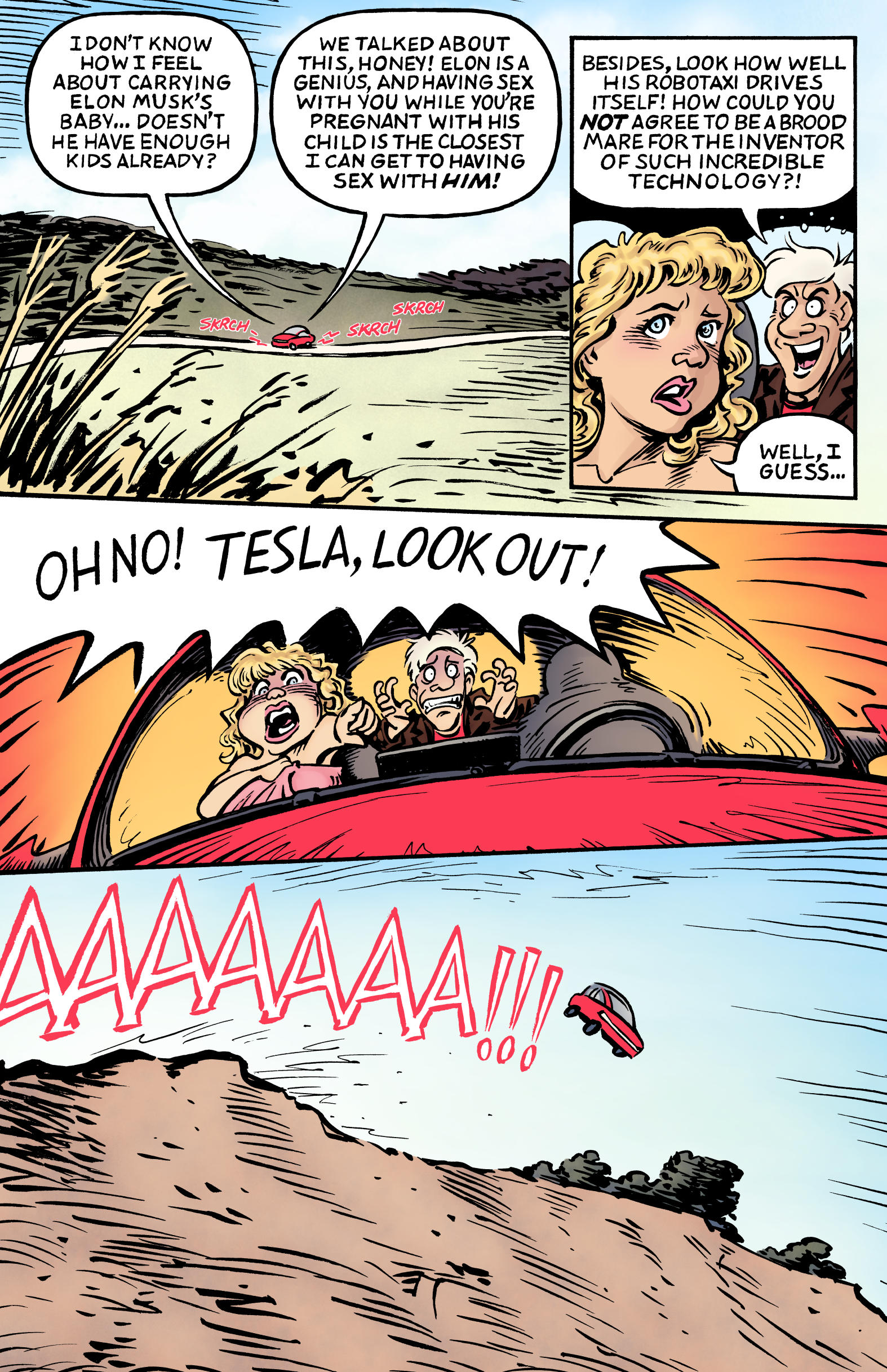

2025 sure was a dogshit year, huh?
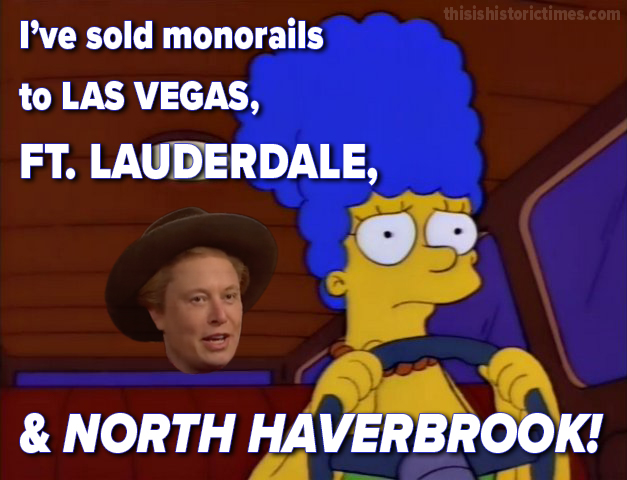
I began it with a short, three-page comic about Elon Musk, the po-faced, drug-addicted, serial liar and insufficiently-embarrassed neo–Nazi from Apartheid South Africa who possesses no meaningful talents or skills other than a mystifying ability to routinely defraud people on a massive scale like Lyle Lanley from The Simpsons despite having even less stage presence and a markedly worse personality than Reginald Barclay from Star Trek: The Next Generation, so I suppose there’s an oddly appropriate symmetry to ending it with a short, three-page comic about one of his most recent and prominent boondoggles.
It seems the theme to which he’s repeatedly chosen to return this year—at least when he wasn’t simply immolating billions of dollars in US taxpayer funding to get nothing more than a single banana not even into low-earth orbit—has been that of the Mechanical Turk, a 250-year-old stage illusion in which people were invited to play chess against an allegedly automated opponent which was in fact operated by a human chess master hidden inside the device.
This is familiar territory for Elon, who launched his entire career by conning investors with a fake computer system, then tricked Compaq into wasting $300 million on a worthless MapQuest clone using presumably similar tactics. Where’d that get Compaq, anyway?
Fast forward to this year, when Elon, without a hint of irony, told a crowd of credulous idiots that Tesla’s “autonomous” humanoid robots would be worth $25 trillion, and that the company would produce “5-10,000” of them before 2026 even though one could barely manage to fetch a Coke while walking like it had to take a dump in September, and another hilariously fell over backwards during a public demonstration only a few weeks ago when its teleoperator removed the headset used to control it after failing to pick up a bottled water.
What’s with these things and bottles of liquid? Were they built using Wicked Witch technology?
As of December 31st, with mere hours left to make good on Elon’s claim, the robots are still blaring Price Is Right loser horns, but what about his other, bigger “autonomous” project, the “Robotaxi?” He’s been promising that Teslas would be capable of driving themselves across the country in only a year or two, without any human intervention required, since at least 2017. In fact, he first claimed, in 2013, that they would be able to autonomously handle “90%” of all driving by 2016.
As anyone who isn’t a grossly-negligent driver knows, no Tesla was capable of safely driving without human supervision “90%” of the time even four years after 2016. Still, that didn’t stop Elon from confidently declaring in 2020 that there would “for sure” be “over a million” Robotaxis on the road within a year, though the number of fully-autonomous Tesla vehicles of any kind remained at zero by July, 2025, at which point he said, “I think we’ll probably have autonomous ride hailing in probably half the population of the U.S. by the end of the year.”
Well, it’s the end of the year. Tesla does not have “autonomous ride hailing in probably half the population of the U.S.,” whatever that ketamine-garbled statement means. It does not have vehicles without safety monitors in either the driver’s or the passenger’s seat in any city other than Austin, Texas. There are not “500” Robotaxis in Austin, with or without a safety monitor, as Elon claimed in October there would be by December 31st, 2025.
Even the drastically-reduced goal of 60 he made in November has not been met. Most reasonable estimates put the entire fleet at no more than about 30 vehicles, confined to the Austin area, with only five or six operational at any given time, probably because that’s the maximum number of these trundling Mechanical Turks that Tesla’s whole staff of “chess masters” can handle all at once.
None of them are fully autonomous. They all either contain safety monitors or depend upon teleoperation or both. After all the ludicrous numbers of “fully autonomous” vehicles Elon has promised for over a decade, the amount he’s actually delivered by the end of 2025 is still zero.
Yeah, that sure sounds like a trillion dollars’ worth of value, huh?!
The reference to which my comic relates these failed “Robotaxis” is Toonces, The Cat Who Could Drive A Car, a recurring character from early-‘90s SNL. True to his name, Toonces was a cat who could drive a car, though he wasn’t very good at it, almost always driving over a cliff, sometimes more than once in a single sketch (and one time even crashing a flying saucer into the Washington Monument).
This never seemed to convince his foolishly-supportive owners to stop letting him get behind the wheel. They were initially portrayed by Victoria Jackson, whose usual, air-headed persona was actually an asset to the amusing stupidity of the premise, and Steve Martin, who brought just the right level of child-like naïveté and derangement to his character before the role was taken over by a more muted Dana Carvey for all subsequent appearances.
The main challenge for me, then, was to make that character look simultaneously like Steve Martin and Dana Carvey. I ended up doing it by identifying head shapes that caricatures of both Martin and Carvey might have in common, then combining Carvey’s hair and body proportions with Martin’s face and distinctive hair color.
Initially, this was going to conclude with the car driving off the cliff, as a broader joke about safety issues with Tesla’s dangerous, dishonestly-advertised “Full Self Driving” technology, and the delusional morons who bet their lives (as well as the lives of others) on it, but when one of the articles I read about the “Robotaxis” in Austin mentioned their obvious reliance on teleoperation, I thought it would be interesting if, after the comic began as merely an overt Toonces reference, it actually became a Toonces sketch by the end, with Toonces having driven the car remotely. It seemed like the kind of thing modern SNL might do when referencing one of their classic segments.
Hopefully the comic is still funny and its message is still clear whether people get the reference or not.

Leave a Response